The wireless dead zone inside a building is a public safety failure. We exist to end it.
For more than a decade, the Safer Buildings Coalition has worked to eliminate in-building wireless dead zones through standards, workforce development, and policy leadership — independent of any product, accountable to the mission.
If you ask long-time industry leaders how they would describe the Safer Buildings Coalition (SBC), chances are they will say something like: “The Safer Building Coalition focuses on in-building public safety LMR (Land Mobile Radio) used by firefighters and the model fire codes that… .”
For over a decade we were heads-down – building the codes and standards that have been the drivers of the In-Building Public Safety Coverage Movement.
While deep focus on Codes, Standards, and LMR have been the prevailing public impression of the Coalition, the scope has always been larger. We used the Internet Archive Wayback Machine to look at the SBC website dating back to October 7, 2014. This was the SBC Mission Statement as it appeared on that date:
SBC Mission (10/7/2014)
From our inception before the FCC in February 2012, the Safer Buildings Coalition has been at the forefront advancing the idea that wireless technology makes people inside large buildings safer.
When the public can use their mobile phones to call for help, be notified when there is an emergency, and know that emergency personnel can communicate inside the building where the emergency is taking place, we will have fulfilled our mission.
The Safer Buildings Coalition is an independent, non-profit organization focused on advancing policies and ideas that lead to more large buildings being served with commercial and public safety wireless coverage.
Compare that with SBC’s Three Pillars of In-Building Public Safety Communications found on the front page of our website today:
- Mobile 911 Calls Must Get Out with Location Accuracy
- Mobile Mass Notifications Must Get In
- First Responder Communications Must Work
They are almost identical!
The current industry perception of SBC is of our own making. We have not done enough to ensure our members and the market will understand our Mission and Focus:
- SBC HAS ALWAYS had a Mission that concerned in-building communication resources for both First Responders AND the public
- SBC HAS ALWAYS recognized the need for coverage and connectivity for both public safety LMR trunked radio systems AND cellular communications
- Our very name – the Safer Buildings Coalition – conveys the idea that the entirety of the building, and everyone in it, must be safer.
SBC continues to Hone its Focus to Better Serve the Core, Original Mission
In the first quarter of 2017, the SBC membership list was very modest, as were its financial and staff resources.
“The SBC board of directors faced a decision,” SBC Founder and Cathedral Consulting CEO Seth Buechley said. “Continue to plod along resting on belief that the mission was important enough that others would eventually discover us and join the Coalition, or take a proactive approach to industry leadership by adding a full-time ‘operator’ to intentionally begin taking steps that would allow SBC to scale into a leading national trade association. With the hiring of Managing Director John Foley, the stage was set for rapid growth, building upon the early foundation that had been laid.”
Over the next 12 months, SBC leadership committed to grow staff, resources, and our member base. In March 2017, the SBC team consisted of one staff (Chief Alan Perdue), three board members, no volunteers, and 11 member organizations.
Today, SBC has expanded to a distributed staff of nine, a fully outsourced finance and bookkeeping team, and the support of four volunteer work groups, each with a Chair and a Vice Chair, and a current tally of almost 60 volunteers and 129 member organizations!
An Association with Impact and a Heart: Doing Well While Doing Good
In the fall of 2018, the SBC team adopted The Six Practices of High-Impact Nonprofits – taken from Forces for Good – the watershed work by Leslie R. Crutchfield and Heather McLeod Grant.
These Six Practices are:
- Advocate and serve. In addition to serving our members, add policy advocacy to access government resources or to change legislation.
- Make markets work. Influence business practices, build corporate partnerships, and develop earned-income ventures — all ways of leveraging market forces to achieve social change on a grander scale.
- Inspire evangelists. Build and sustain strong communities to help them achieve their larger goals.
- Nurture nonprofit networks. Don’t compete with other associations and media channels. Partner with them and enable them. Provide professional content in exchange for access to their platforms.
- Master the art of adaptation. Master the ability to listen, learn, and modify our approach based on external cues — allowing us to sustain their impact and stay relevant.
- Share leadership. Distribute leadership throughout the organization and our member network — empowering others to lead.
Our epiphany was that partnering with and enabling the business of our members it is not at conflict with serving our mission – it is a core value.
What is SBC doing regarding these principles? A Lot. We will expand on this in a future article.
More importantly, how do you think we are performing in concert with these principles?
Why Is Fostering a Robust, Scalable, Competent Industry Mission Critical?
The problem of wireless dead zones inside buildings – coverage gaps caused by ever-higher radio frequencies, and the proliferation of energy efficient materials that block these radio waves – is not primarily a technology problem. The technologies available to get outdoor radio signals into a building are well understood.
Bi-Directional Amplifiers (BDAs), Distributed Antenna Systems (DAS), Small Cell, even future technologies like 5G and CBRS, all play a part in solving for dead zones. While innovations to address cost per square foot, better jurisdiction control over these systems, and interference management are all necessary and desirable improvements, technology is not the primary problem.
The real challenges are the business models that pay for these technologies and the regulatory and ecosystem drivers that have direct impact on these business models.
The Size of the Unmet Market Need is the Opportunity and the Challenge
There are approximately 6.2 million commercial properties in the US, broken down as follows:
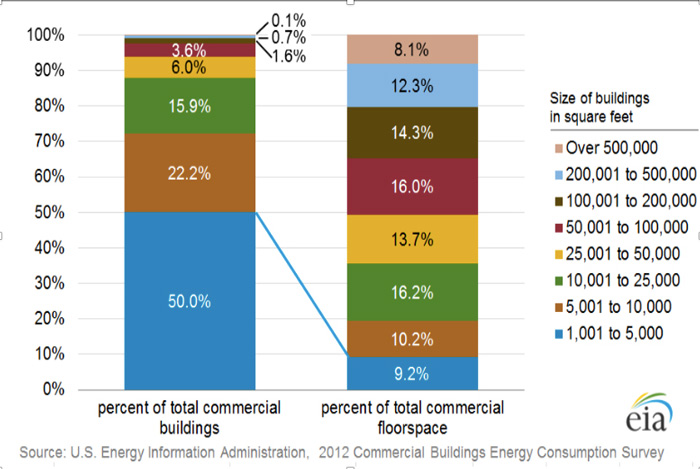
The original Department of Energy report is from 2012. At the time, there were 5.6 Million commercial buildings in the US. A 1.2% annual growth rate over the past 9 years projects to a current total of about 6.2 million buildings. Based on this, there are roughly 750,000 buildings comprising the Large Venue and “Middleprise” space:
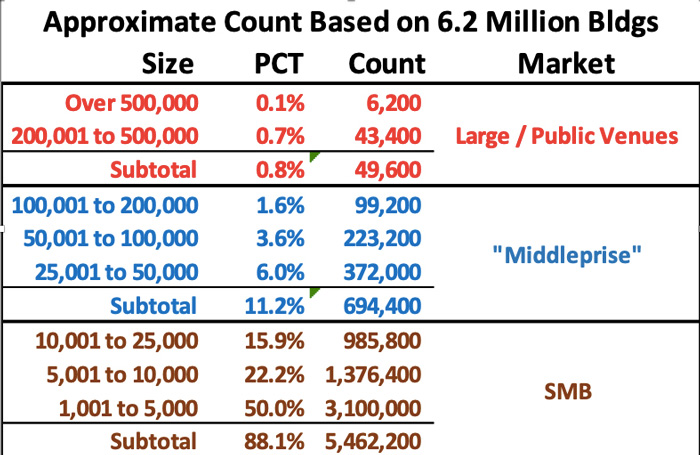
Without a robust, competent, and scalable industry that invests in both technology and business model innovation, we could never deploy enough solutions to correct the in-building coverage gaps plaguing the safety of the public.
“The need for in-building communications coverage is more important than ever,” said Alan Perdue, Executive Director of the SBC. “First Responders and the public depend on communications capabilities not only during an emergency but also while conducting routine business or personal needs.”
“Because of this demand for coverage, more companies and individuals are entering the marketplace. The experienced workforce continues to be diluted. As such, it is vital that the needs for specialized training, certification of the workforce and codes and standards be addressed. The SBC continues to provide thought leadership within each of these areas from both a strategic and tactical aspect in an effort to achieve our goals.” Chief Perdue continued.
Our First Tagline: Feel Safe Inside™
Recognizing that we needed to communicate the entire scope of our original mission, the Safer Buildings Coalition this year changed our tagline from In Building Communications When You Need it Most to our new trademarked tagline: Feel Safe Inside™. This better conveys the idea that all people need to feel – and be – safe inside buildings.
This opens the door for considering other important in-building safety technologies that can take advantage of core in-building infrastructure investments – and deepens our alignment with our members, most of whom offer much in addition to the products and services typically associated with “public safety wireless.” Location accuracy, situational awareness, wayfinding, digital signage, smart building technologies, building management systems, environmental controls – all play a role in the relative safety of buildings. As we like to say: “It takes a smart building to be a safe building.”
Our Current Tagline: 9-1-1 inside™
Safer Buildings Coalition | May 2026
In May 2020, the Safer Buildings Coalition published an article asking a deceptively simple question: had our mission changed? The answer then was no. From the beginning, the work has spanned LMR, cellular, and mass notification. Codes today cover LMR and, in nascent ways, broadband. What ties the technologies together is the safety argument: inside a building, being disconnected is unsafe. The tagline — Feel Safe Inside™ — captured it.
Five years on, the mission still hasn’t changed. But almost everything around it has.
Uvalde. The growth of in-building wireless deployments, now numbering in the hundreds of thousands of systems nationwide. State legislatures preempting fire codes. A workforce racing to catch up to its own demand. A national debate over cell phones in schools that has quietly become a debate over emergency communication. And, this year, the first comprehensive opportunity to revisit Part 90 signal booster rules since 2013.
What follows tracks the work that matters most: 9-1-1 Inside, school safety, codes and standards, workforce competency, and the broader alliance now holding the safety ecosystem together.
9-1-1 Inside: From Principle to Policy Agenda
In 2020, “9-1-1 Inside” was not a phrase in use. SBC coined it in 2024. Today it is the organizing principle behind two of the most consequential federal filings the Coalition has ever made.
Your ability to dial 9-1-1 from a mobile device should not depend on where you’re standing at that moment — especially inside buildings.
The FCC Signal Booster Petition (July 2025)
In July 2025, SBC filed a formal petition with the Federal Communications Commission (FCC) asking it to amend 47 CFR § 90.219 and establish a comprehensive authorization framework for Part 90 industrial signal boosters. On September 16, 2025, the FCC issued Public Notice DA 25-853 opening the petition (Proceeding RM-12009) for public comment.
The problem the petition addresses has been documented for over a decade. FCC rules require “express consent” from frequency licensees before a signal booster can be installed, but no standardized procedure exists for requesting, evaluating, granting, or tracking that consent. The result: improperly deployed systems causing harmful noise and interference to the very public safety networks they were meant to support, plus enormous resource drain on federal, state, and local agencies cleaning up the mess. The Department of Homeland Security / Cybersecurity and Infrastructure Security Agency (DHS/CISA) has formally documented that uncoordinated Bi-Directional Amplifiers are causing harmful interference “potentially placing first responders in jeopardy.” The Association of Public-Safety Communications Officials (APCO), which has worked alongside SBC on authorization framework development, has confirmed the same in member surveys.
Why this matters: the last comprehensive look at Part 90 signal booster rules was in 2013. Whatever framework comes out of this proceeding will likely shape the next decade of signal booster deployment in the United States.
Wireless E911 Location Accuracy (July 2025)
Two weeks before the signal booster petition, SBC filed comprehensive comments with the FCC in PS Docket No. 07-114 — the 6th Further Notice of Proposed Rulemaking (NPRM) on Wireless E911 Location Accuracy. The Coalition’s filing tied two issues together that policymakers had treated separately: location accuracy and indoor wireless coverage. A 9-1-1 call is only as useful as the location it carries, and a location is only as accurate as the in-building infrastructure that lets the call go through in the first place.
According to the FCC (Section 706 record), a one-minute improvement in emergency response time could save nearly 14,000 lives annually in the United States. That number reframes 9-1-1 Inside from a policy preference to a public health argument.
School Safety: From Awareness to Architecture
Of all the areas where SBC’s work has deepened since 2020, school safety has changed the most — and the most painfully.
Crisis in Plain Sight (2022)
In November 2022, six months after the assault on Robb Elementary School in Uvalde, Texas, SBC published Crisis in Plain Sight: In-Building Public Safety Radio Coverage in Schools. Drawing on testing data contributed by member companies across the country, the Coalition reported on 577 K-12 school buildings sampled. 277 passed. 300 — a 52% failure rate — had at least one floor that failed. The conclusion was unambiguous: wireless dead zones in American schools are not rare. They are the norm.
The article also revisited after-action reports stretching back to Columbine in 1999 and showed that the recommendation to install in-building radio repeaters in schools has been on the public record for a quarter century. From the Columbine Review Commission to the Reynolds High School after-action report in 2014, the language is almost interchangeable: until communications from inside large structures can reach outside receivers, transmission repeaters should be considered necessary safety equipment — like fire alarms and sprinklers.
In Uvalde, students’ cell phones did not fail. Texts and calls from trapped children provided the situational awareness that the emergency communication infrastructure could not deliver.
That sentence connects SBC’s in-building work to a newer line of advocacy: the role of student-owned devices in school emergencies.
School Mode (2026): Bringing an Emergency Communications Lens to the School Phone Debate
In early 2026, SBC released a white paper proposing “School Mode for Cell Phones” — a device-level operating system capability, analogous to Airplane Mode, that would restrict distracting apps during school hours while preserving 911 access, parent communication, medical monitoring, and educational tools.
The problem School Mode addresses is one SBC did not invent. More than 20 states have implemented bans or significant restrictions on phones in schools. 72% of high school teachers identify cell phone distraction as a major classroom problem. But the way schools are solving it — pouches, lockers, suspensions — has created an emergency communication gap. Suspensions more than doubled in one large Florida district during the first month of enforcement. 78% of parents want their children to have phone access during school emergencies. Only 30% report being consulted before policies were adopted.
School Mode’s three non-negotiable principles are characteristic of SBC’s approach to policy:
- Family decision, always opt-in, never mandated.
- Emergency access is absolute — integration with FEMA’s Integrated Public Alert and Warning System (IPAWS) and other alert systems would automatically override restrictions during a crisis.
- Schools control their own policies — School Mode provides the enforcement mechanism, not the rules.
The proposal was discussed at the International Wireless Communications Expo (IWCE) 2026 in Las Vegas alongside Lori Alhadeff of Make Our Schools Safe, Professor Thomas Toch of Georgetown’s FutureEd, and Keri Rodrigues of the National Parents Union. SBC’s framing — that the school phone debate cannot be separated from the question of emergency communication — has reshaped the conversation.
An Expanded Program
Beyond white papers, the work has scaled. SBC’s 2026 seminar series includes six dedicated School Safety Technology seminars in cities including Atlanta, Houston, and Salt Lake City, alongside fifteen Emergency Responder Communications Enhancement Systems (ERCES) seminars and the expanded two-day Wireless Tech and School Safety Summit. The Coalition continues to support Alyssa’s Law alongside Make Our Schools Safe, and its School Safety Work Group is now one of four active SBC work groups.
Codes and Standards: A Quiet Effort Becomes a Public One
The bedrock of in-building public safety has always been the codes — the International Fire Code (IFC), the International Building Code (IBC), and the NFPA standards that mandate emergency responder communications in buildings. For most of SBC’s history, the codes work has been a steady technical grind: committee participation, code proposals, jurisdiction education. In 2026, it became something else.
Indiana 2026: When Politicians Replaced Fire Safety Experts
In March 2026, the Indiana General Assembly passed two bills that the National Fire Protection Association (NFPA) and the National Association of State Fire Marshals (NASFM) have identified as the most significant rollback of building safety authority in a generation.
House Bill 1003 abolished Indiana’s Fire Prevention and Building Safety Commission — the independent, bipartisan body that had governed the state’s building and fire safety codes for nearly 40 years. Its authority transfers to the Indiana Department of Homeland Security on July 1, 2027. Every nationally recognized safety standard currently adopted in Indiana — fire alarms, electrical systems, ERCES — is frozen at editions more than a decade old. Any update requires a vote of the state legislature.
House Bill 1001 went further. Effective July 1, 2026, no government body in Indiana may require ERCES installation in Class 1 structures — broadly defined as any building used by the public, with three or more tenants, or with more than one employee. Existing local ordinances are voided. No community may opt out. The bill also bans arc-fault circuit interrupter (AFCI) requirements in covered residential occupancies. 48 states require AFCIs. Indiana now forbids any level of government from doing so.
Of the more than 60 state bodies abolished or restructured by HB 1003, the Fire Prevention and Building Safety Commission was the only one to generate a formal legislative defense — two bipartisan amendments seeking to preserve it. Both failed. The ERCES and AFCI prohibitions in HB 1001 were inserted as a Senate floor amendment after public testimony had already closed. No public hearing was held on the provisions. The bills’ sponsors have direct ties to the Indiana Builders Association and the National Association of Home Builders. The fire safety community, working through NFPA and NASFM, has identified Indiana as a visible front of a broader effort by building and real estate associations to weaken fire and building safety requirements.
Aligned With NFPA and NASFM
The Coalition stands alongside NFPA and NASFM on this issue. NFPA President Jim Pauley sat down with SBC Managing Director John Foley in late 2025 for a podcast interview as part of NFPA’s “Safety Under Assault” series — a body of work documenting how the independent technical process underpinning American safety standards is being eroded by political pressure. NFPA’s parallel public-facing campaign, “Don’t Chance Safety,” is building broader public awareness.
NASFM has formally adopted a position opposing legislative action that bypasses the national consensus code development process. A joint fact sheet co-signed by NASFM and NFPA, with additional organizations in process, is being distributed at FDIC and through the fire safety community.
The Quiet Wins
Even as the public fight in Indiana absorbs attention, the technical work continues. SBC co-sponsored Proposal F76-24 to the 2027 International Fire Code, which removes the FCC General Radio Operators License (GROL) requirement from ERCES personnel qualifications — a 15-year-old requirement that no longer reflects modern RF design practice. F76-24 has passed both Committee Action Hearings; the Public Comment Hearing is scheduled for April 19-28, 2026. The 2027 edition of NFPA 1225 will also include substantial revisions to Qualifications of Personnel.
Workforce: Building the Industry the Mission Requires
In 2020, SBC said something that has held up: the in-building communications problem is not primarily a technology problem. The technologies are well understood. The challenge is the business models that pay for them and the workforce that deploys them. Five years later, that workforce challenge is the defining one for ERCES.
The Complete ERCES Handbook — co-authored by Chief Alan Perdue, Mike Brownson, and John Foley, reviewed by 20 subject matter experts — is now in its mature form, with more than 4,000 copies in circulation. It serves as the official study guide for the National Institute for Certification in Engineering Technologies (NICET) In-Building Public Safety Communications (IB-PSC) certification examinations and as the basis for the top training programs in the industry. The U.S. Department of Labor (DOL) has adopted it as the foundation for an Apprenticeship Standard: Safer Building Technician In-Building Wireless Installation Technician (IBWIT), O*NET-SOC Code 49-2022.00, RAPIDS Code 3036HY.
NICET launched the IB-PSC certification program in 2021, developed in collaboration with SBC. It now offers four levels (Technician I-III and Design), requires supervisor-attested field experience ranging from six months to five years, and was validated by 246 industry professionals through job task analysis. It is the gold standard in ERCES credentialing, and NFPA 1225 Annex A.3.3.115 specifically references it.
Since 2017, SBC has invested approximately $4.8 million in educational programming — over $4 million in seminars and industry events, plus roughly $750,000 in ERCES Handbook development, printing, and distribution. NICET separately invested approximately $1 million in developing the IB-PSC certification program. These numbers put a price tag on the kind of standards-based, consensus-driven work the industry now needs at scale.
In October 2025, SBC published a major thought-leadership piece, “ERCES Training and Credentials,” laying out a framework to help Authorities Having Jurisdiction (AHJs), employers, and practitioners cut through the noise around certification. The article distinguishes standards-based professional certifications (the NICET pathway), manufacturer product certifications, and certificates of completion — and warns plainly against training operations that obscure their commercial relationships.
Two new initiatives are flowing from that work:
- The SBC Authorized Training Provider Program, launching in 2026, will establish criteria for training organizations to become SBC-authorized providers and connect quality training to industry-recognized certifications.
- A Credential Verification Platform is in development, with initial release targeted for 2026, giving jurisdictions, building owners, contractors, and practitioners a single place to verify ERCES credentials — including manufacturer certifications and continuing education.
The Content Development Committee — chaired by Gary Wood of InfiniG — and the SBC Education Advisor role, now filled by Mike Brownson, anchor the long-term plan.
The Coalition: A Different Organization
In 2017, the SBC team was one staff member, three board members, no volunteers, and 11 member organizations. By 2020 those numbers had grown to a distributed staff of nine, four volunteer work groups, almost 60 volunteers, and 129 member organizations. Today, the Coalition counts more than 150 member companies, four active work groups (Codes and Standards, Government Affairs, Member Advocacy, and School Safety), and a 2026 seminar series running to 21 programs across the United States plus the expanded Wireless Tech and School Safety Summit. The Coalition runs a podcast, a video library, a quarterly newsletter, a member showcase platform, a career board, and the No Noise Task Force focused on RF interference mitigation.
The list of organizations working alongside SBC has grown to match — NFPA, NASFM, the International Code Council (ICC), NICET, ETA International, APCO, BICSI, DHS/CISA’s Bi-Directional Amplifier Focus Group, Make Our Schools Safe, AT&T and FirstNet in the in-building broadband work, and the FCC, now a forum where the Coalition is actively engaged on two open proceedings.
The Same Mission. A Different Decade.
Read the 2020 article and the through-line is obvious. The pillars haven’t changed: mobile 9-1-1 calls must get out with location accuracy. Mobile mass notifications must get in. First responder communications must work. Everything else flows from those three commitments.
What has changed is what those commitments now require. In 2020, much of the work was outward-facing evangelism — building awareness among jurisdictions and building owners. In 2026, the work is defending wins that were not yet finished, building credentialing infrastructure for a workforce that has to scale fast, taking real positions in front of the FCC, and standing alongside NFPA and NASFM when state legislatures try to undo decades of consensus safety standards.
The mission hasn’t changed. The stakes have. The Coalition built to meet them is bigger and sharper than it was five years ago.
Good Bones – The Building Blocks of Addressing the Business Model Challenge
At the heart of almost every current and future PropTech and CRE Communications system are common physical assets:
- Pathway (Conduit, chases, cores, raceways, etc.)
- Connectivity (Fiber, fiber, fiber, copper, patch panels)
- Power (Centralized, sustainable, resilient, reliable, distributed, digital)
- Environmental (Space, Cooling)
- Access (Closets, Demarcs)
- Current, Accurate Records
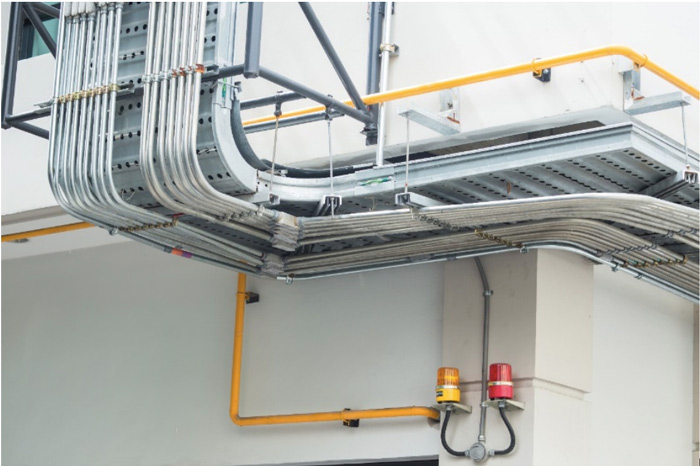
These are a building’s bones, and good bones are everything! You can think of the in-building systems that ride on these bones as over-the-top applications:
- What You Must Have:
- Public Safety Wireless Coverage
- What You Also Need and Want:
- Cellular Wireless Coverage
- Business Telephone Systems
- Fire Alarm Systems
- WiFi
- Private LTE (CBRS)
- 5G
- Building Management Systems (BMS)
- Access Control
- Surveillance and Security
- Digital Lighting
- The Applications and Services of Tomorrow
Mandated Public Safety Infrastructure Spend Is the Ante That Changes the Model
Building owners and developers, faced with fire code compliance requirements, must invest in communications infrastructure to get their Certificate of Occupancy. Their timeline to spend is a dictated requirement. With proper planning and guidance, smart building owners can leverage this mandated spend to solve for other technology needs that were once considered discretionary or nice-to-have.
Industry vendors who earn these projects establish “beachfront property” status in these buildings and the related accounts. This is because in-building public safety requirements include the need for constant monitoring and long-term re-testing and re-certification. This establishes a recurring revenue base and ongoing engagement with the property owner.
This provides the opportunity to convert capital investments to long-term leases or operating budget models, with tech-refresh cycles and other financial features not typically feasible in old-school capital leasing models. Building a Communications Infrastructure Master Plan can significantly reduce future costs and tenant inconveniences associated with re-mobilizing labor and re-opening walls and ceilings. It avoids duplicate physical infrastructure, which can usually be shared among systems.
Listening to You – SBC Enabling You to Do Well While Doing Good
In order for industry to fully embrace the SBC Mission, we had to embrace the business needs of our members – “To do well while doing good.”
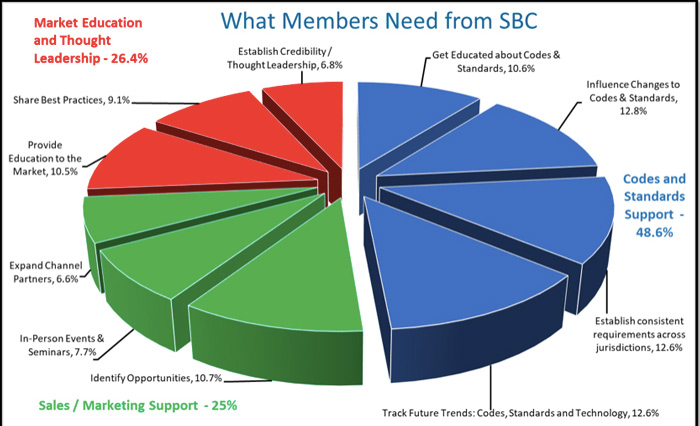
The SBC team realized that, while we must continue to focus on the drivers that enable the in-building space and improve indoor connectivity, we must also align our members’ tools and resources to enable them to succeed in becoming more competent and robust. In a recent survey, our members told us about what they need from the Coalition:
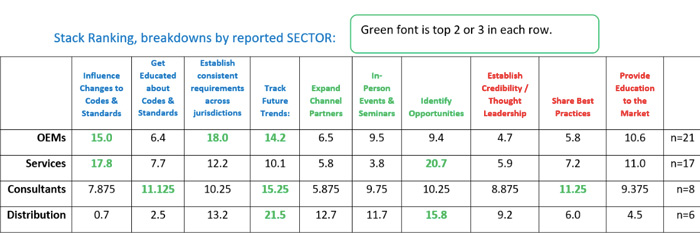
Certain member sectors had slightly different requirements:
SBC can best achieve our collective mission when we inspire and earn high levels of engagement from our members. To do that, we must provide for the needs identified above, and always be asking if we are on the right track. We need you to tell us – through survey responses, work group participation, and your direct involvement – if we are on the right track.
This is YOUR Coalition! Make it work for you, and together we will work for the Mission!
Key Takeaways to Maximize the Value of Coalition Membership
- Active Engagement
- Participate in Work Groups, Seminars, Webinars
- Read what we send you
- Network with members
- Use the Tools
- It’s like a Gym Membership: “If I join the gym, will I get in shape?”
- Rebrand our Collateral and use it to build Your Thought Leadership Credibility
- Use the Website – Use the Showcase – Post Blogs, Articles, Content
- Schedule Your Annual Executive Briefing with our Senior Team
- Use our Radar
- Get an Advance look at upcoming changes to adjust Product Roadmaps and Market Strategies
- Have a Voice
- Influence market, codes, and regulatory changes instead of reacting to them
- Use SBC to develop your staff’s Leadership Experience
- Work Group Chair, Vice Chair, Run in Board Officer Elections
The Mission Remains the Same: Save Lives. Build an Industry. Do Well While Doing Good!
The definitive reference on Emergency Responder Communication Enhancement Systems — code, design, testing, commissioning and maintenance in one volume.
The Complete ERCES Handbook with NICET In-Building Public Safety Communications (IB-PSC) Study Guide, by Chief Alan Perdue (ret.), CFO, FM and John S. Foley, with Mike Brownson. © Safer Buildings Coalition. All rights reserved.